Special report · September 2026
Two Manonos
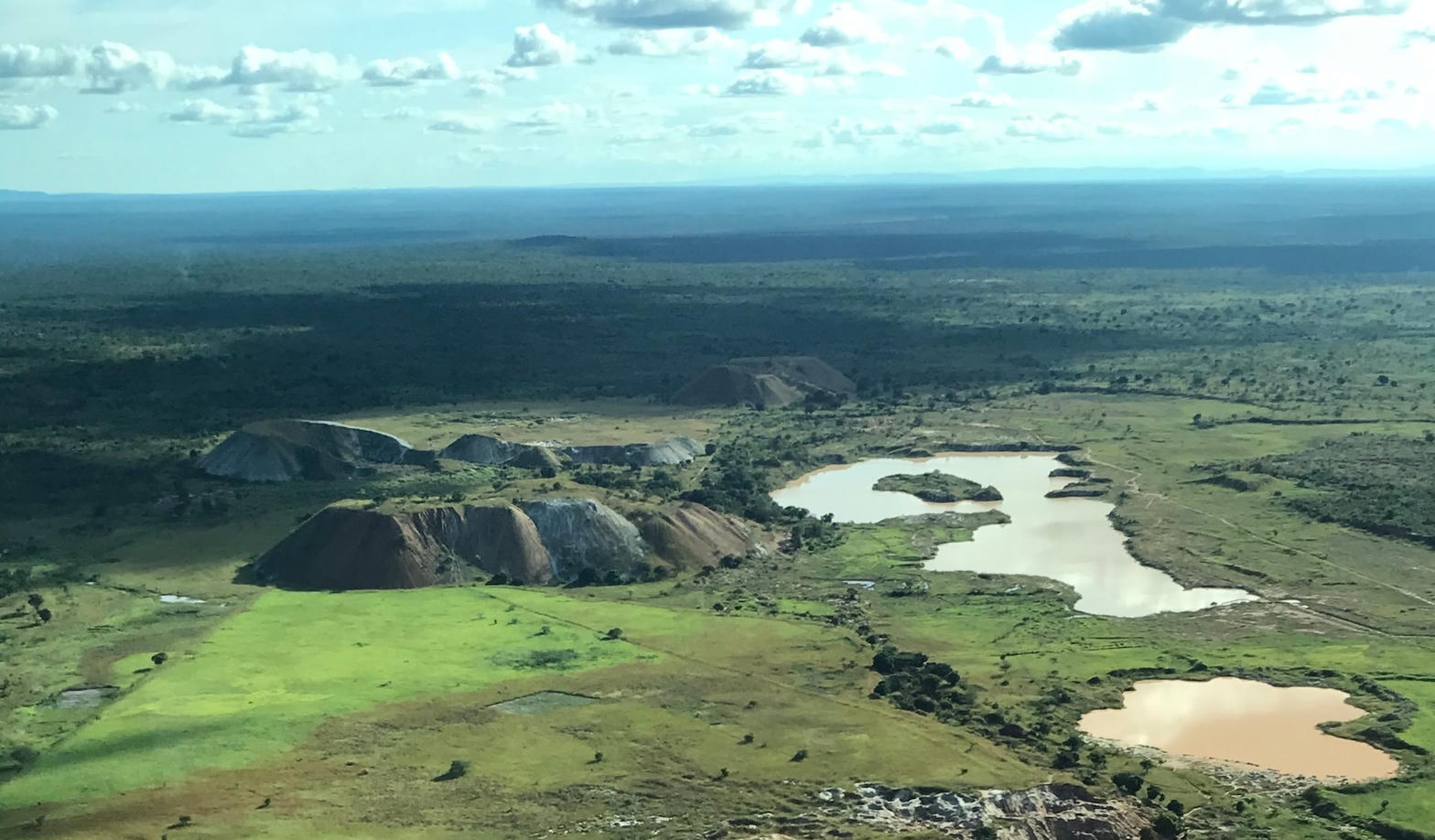
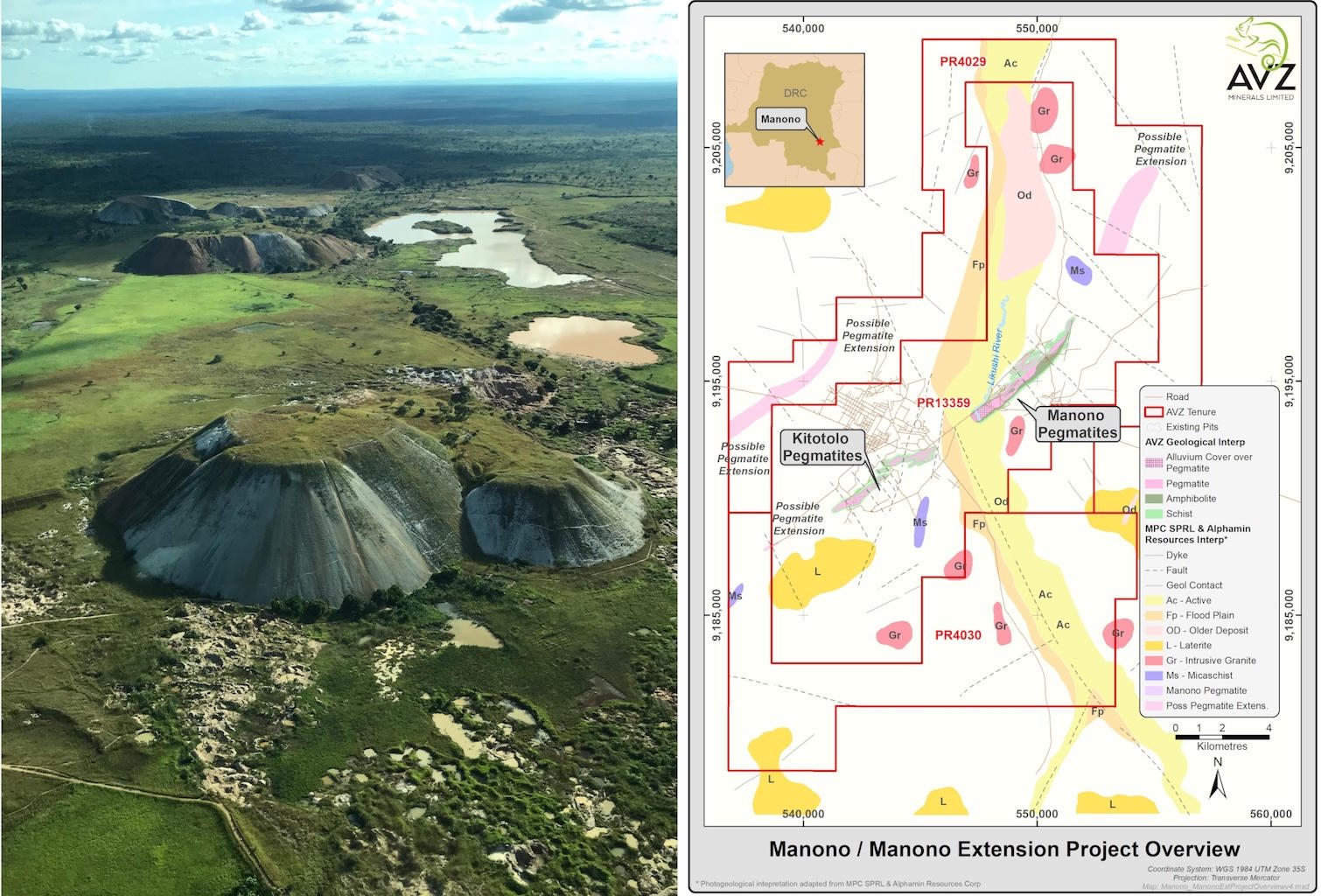
Manono is an old tin town. AVZ, an Australian company, held the lithium ground. After the 2022 exploitation decree was cancelled, the north was parked with Manono Lithium — Zijin of China and Cominière of the DRC. AVZ calls that a taking. An ICC tribunal found Cominière broke emergency orders to put that vehicle on the title. The town was told lithium would be a second life. On AVZ’s watch that life did not arrive.
AVZ’s claim: the mine was taken and handed to China
The public spine of the taking is not a metaphor. In May 2022 the mines minister signed Dathcom’s exploitation decree. In January 2023 the same minister cancelled it. The north of PR 13359 was then run by Manono Lithium SAS — Zijin Mining of China and Cominière, the state miner. Reuters and Mining Technology record that the ICC, on 10 March 2025, found Cominière had breached earlier orders by splitting the title and assigning PR 15775 to that Chinese–state vehicle, and ordered €39.1 million in penalties. The Australian Financial Review recorded the minister’s revocation order in February 2023. The Institute of Development Studies later wrote that Manono was originally an Australian project, “a permit taken back,” and that Zijin filled the opening. Kinshasa still says delay under the Mining Code. No criminal theft conviction of the named ministers was located. The ICC findings are the hardest independent support AVZ has that the Chinese joint venture sat on title that emergency orders had frozen.
Articles that carry the taking, the Chinese assignee, and the money
- Reuters, 14 March 2025 — AVZ scores ICC victory; rights later granted to a Zijin unit
ICC ordered Cominière to pay €39.1 million for ignoring orders to stop ending the AVZ joint venture. Reuters records that after the 2023 revocation the rights were granted to a unit of China’s Zijin Mining.
- Australian Financial Review, 6 February 2023 — Congo’s mining minister orders AVZ’s Manono licence revoked
The minister’s order to cancel the April 2022 Dathcom decree is the state act AVZ calls a taking. Kinshasa’s public reason was delay, not a published bribe ledger.
- Mining Technology, 17 March 2025 — ICC: Cominière split PR 13359 and assigned PR 15775 to Manono Lithium
The tribunal’s findings are the hardest independent support for AVZ’s claim that the Chinese–state joint venture was parked on title that emergency orders had frozen.
- Institute of Development Studies, 7 August 2026 — “A permit taken back”; Zijin filled the opening
IDS records Manono as originally an Australian project, revoked in 2023 for alleged development delay, then reassigned as Cominière switched partners to Zijin.
- Forum des As — IGF indexes Cominière’s director-general over the Dathcom share sale to Zijin
The IGF file cited here says the 15 per cent sale to Zijin breached state-divestment rules and cost the Treasury about US$116.56 million versus the feasibility-study value. That is a published corruption-style finding against the state miner, not a criminal conviction of named mines ministers.
- South China Morning Post, 1 April 2026 — China gains ground as the Australian firm loses permits
SCMP frames the 2023 Manono revocation and the 2026 PR 4029 forfeiture as Chinese firms becoming preferred partners while AVZ loses ground.
- RAID — Congolese workers challenge Chinese-operated mines in DRC courts (slapping, insults, low pay)
Sector pattern, not a Manono Lithium verdict. Supports the claim that abusive labour is documented at several Chinese-operated DRC sites; it does not prove slavery at this plant.
- The Guardian, 8 November 2021 — “Slave and master” at Tenke Fungurume (CMOC), not Manono
The slavery language in this file’s masthead is a moral frame. The Guardian piece is the closest major English investigation of that language at a Chinese-operated DRC mine. It is CMOC copper-cobalt, not Zijin’s Manono lithium plant.
- U.S. H.R. 10346 (10 September 2026) — bill on forced labour in Congolese cobalt mining, Chinese-owned mines cited
A bill is not a conviction. It is Congress stating that forced and child labour in DRC mining, much of it Chinese-owned, is a live U.S. legislative concern.
Purported bribes and the IGF file — allegations, not a ministerial conviction
Investigators and AVZ say officials and the state miner moved value toward Chinese partners. The IGF, as reported by Forum des As, indexed Cominière’s director-general over the sale of 15 per cent of Dathcom to Zijin: the inspectorate said the sale broke state-divestment rules and cost the Treasury about US$116.56 million against the feasibility-study value. Resource Matters and ZAM Magazine put Guy Loando Mboyo’s family in Dathomir, a Chinese-linked vendor in the same chain. Cominière, in its published reply, accused AVZ’s then lawyer Christian Lukusa of a corruption network around a US$20 million escrow. Those are competing corruption allegations. This file will not write “the ministers received bribes” as a verdict. No published criminal conviction of Antoinette N’Samba Kalambayi or Guy Loando Mboyo for taking a Manono bribe was located. The IGF indexing of Cominière’s manager is the hardest published official finding of a value-destroying sale toward Zijin.
What the 2020 definitive feasibility study committed
Open pit and dense-media plant treating 4.5 million tonnes of ore a year, to make 700,000 tonnes a year of SC6 and about 45,000 to 46,000 tonnes of primary lithium sulphate. Pre-production capital US$545.5 million. Modelled mine life twenty years. Construction jobs about 400 to 450; steady jobs about 500 to 550. Local-first hiring, apprenticeships, a foundation, a social development plan, hydro talk around Mpiana-Mwanga, and a special-economic-zone memorandum. Power back to a socially disadvantaged town.
If AVZ had built what the 2020 study described
The April 2020 definitive feasibility study, and later engineering notes, were not a city plan. They were a mine plan with a town attached: a two-stage restart of the Mpiana-Mwanga hydroelectric plant, about eighty-seven kilometres of 120 kV line, substations, an upgraded airstrip, a 150-person camp, Kitotolo houses, local hire, apprenticeships, a social fund, and a 5,000-hectare plantation. AVZ also wrote that it would study an electric mining fleet and hydrogen fuel-cell vehicles once the kit existed, using surplus renewable power. First production was aimed at late 2023. That town was never built under AVZ, because the exploitation title was cancelled in January 2023.
The AVZ workers’ camp — built, then taken with the licence
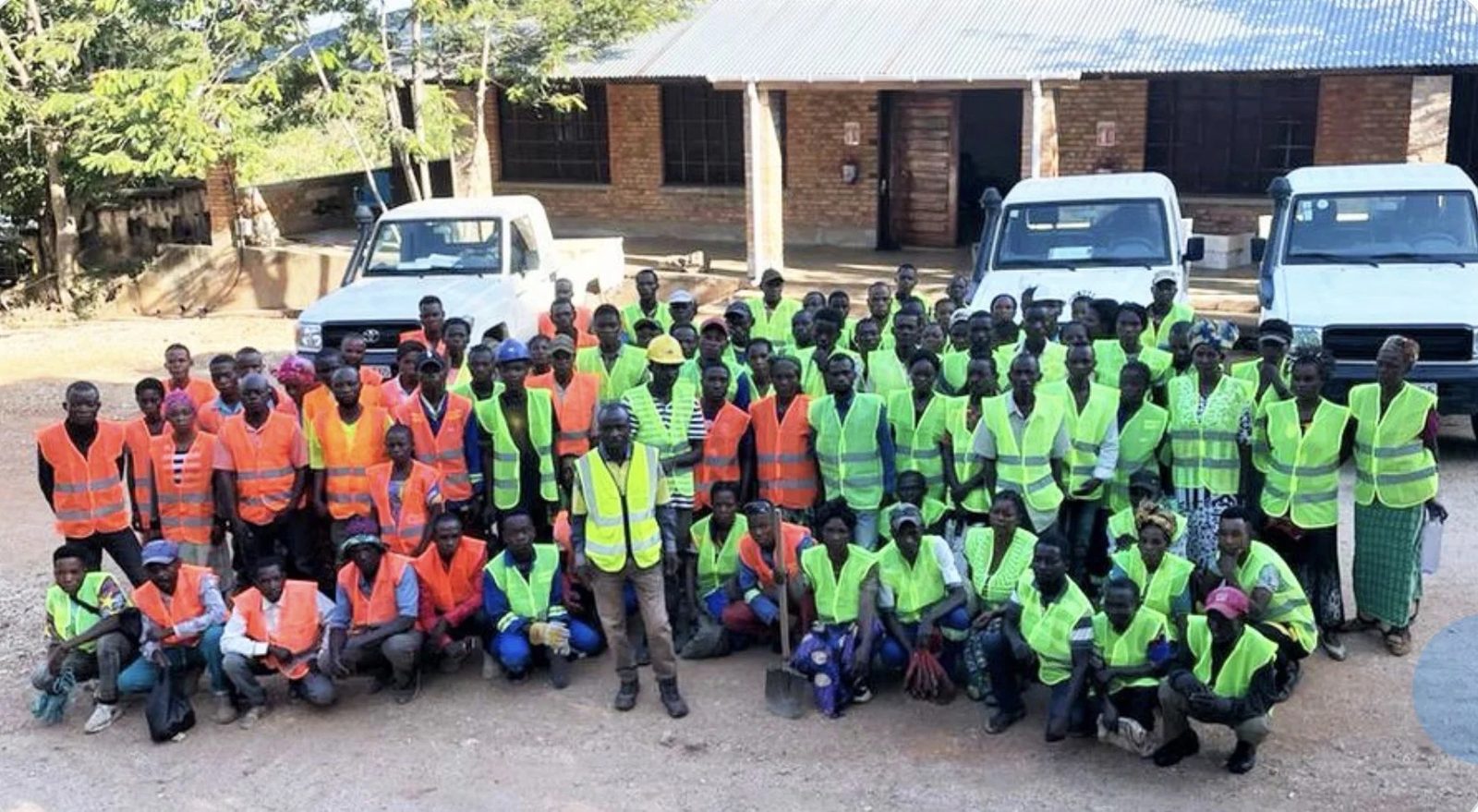
In February 2020 a public film titled “AVZ — MINING CAMP COLLINE” showed the camp AVZ had put up for its workforce at Manono: AVZ-marked buildings, trucks, a dining hall, and Congolese staff on site. That is documentary footage, not an illustration. AVZ’s case is that when the exploitation decree was cancelled and the north of PR 13359 was assigned to Manono Lithium (Zijin and Cominière), the camp went with the ground. This file records that as AVZ’s claim, alongside the ICC finding that Cominière breached emergency orders by splitting the title. It is not a separate criminal conviction for theft of the buildings.
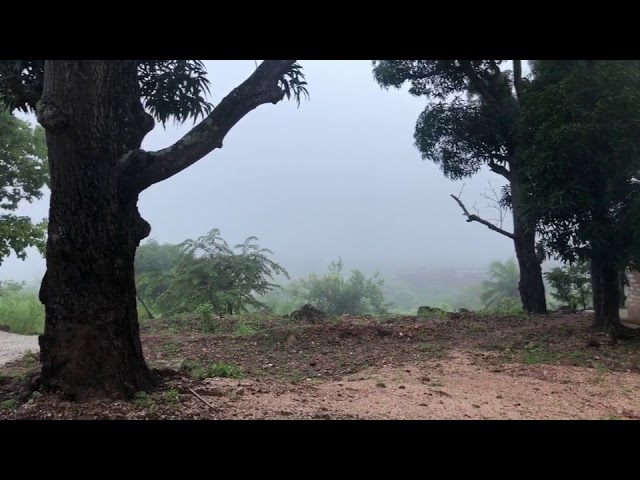
AVZ MANONO CAMP STOLEN

AVZ mining camp, Manono
AVZ
What Manono Lithium has actually done
Zijin, through Manono Lithium SAS, built on the north of the deposit. The processing plant started in May 2026. First lithium-sulphate exports to China followed in June and July 2026 — the DRC’s first lithium exports. Katamba Mining, a Zijin–Cominière vehicle, restarted Mpiana-Mwanga from March 2024 at more than US$80 million, about 40 MW. Roads and bridges were built. Concentrate leaves for China. An electric civic fleet and the social town in the 2020 study have not been shown as delivered.

Manono Lithium
| Building block | AVZ study (forecast) | Manono Lithium (record) |
|---|---|---|
| Power | Refurbish Mpiana-Mwanga in two stages (about 3 × 10.3 MW then 3 × 4.5 MW), 87 km of 120 kV line, later solar and storage. Study an electric mining fleet and hydrogen fuel-cell vehicles from surplus hydro. | Katamba Mining (Zijin 70 per cent / Cominière 30 per cent) restarted the 97-year-old plant from March 2024 at more than US$80 million, about 40 MW reported. |
| Plant and vehicles | 4.5 Mt of ore a year, 700,000 t of SC6, 45–46,000 t of primary lithium sulphate. First AVZ production was aimed at late 2023. Electric haul trucks when kit existed. | Processing plant in May 2026; first lithium-sulphate exports June–July 2026. Design about 5 Mt ore / about 1 Mt concentrate. Product goes to China. No public electric-fleet programme located. |
| Town | 150-person camp, Kitotolo married houses, airport upgrade, HV substations, social plan, 5,000 ha plantation. Construction jobs 400–450; steady jobs 500–550. | Roads, bridges, plant, dam. Lithium is leaving. The social envelope AVZ described has not been shown as built for the town. |
| Pay | Local hire and apprenticeships were written into the social plan. They were never tested at full production under AVZ. | 9–10 September 2026 strike. A driver told Radio Okapi: 28 days worked, 13 paid. Overtime miscount, night premium, family allowances. Company: will regularise August overtime. Workers’ charge of stolen pay; not a court finding. |
Pay shortfalls — the public record, not a hidden beating tape
On 9–10 September 2026 workers at Manono Lithium, including drivers and engineers, blocked the Manono–Kanteba road and burned tyres. Radio Okapi recorded a driver: he worked twenty-eight days in August; the pay sheet counted thirteen. They also asked for overtime, a night premium, and family allowances. AfroNews24 printed the company’s 10 September communiqué: it would regularise the August overtime miscount and raise the night premium. That is a labour dispute on the public record. “Stolen salaries” is the workers’ charge. It is not a criminal conviction, and it is not a recording of a beating.
Forced labour, unpaid days, and the word slavery
The masthead of this file says Manono residents were condemned to a life of slavery. That is a moral charge. What the documents show at this plant is narrower and still grave: on 9–10 September 2026 Radio Okapi recorded Manono Lithium workers blocking the road because a driver worked twenty-eight days and the sheet counted thirteen. RAID and CAJJ have taken Congolese workers to court over slapping, insults and low pay at several Chinese-operated mines. The Guardian’s 2021 “slave and master” investigation was Tenke Fungurume (CMOC), not Manono. A U.S. bill introduced on 10 September 2026, H.R. 10346, treats forced and child labour in Congolese cobalt — much of it in Chinese-owned mines — as a legislative fact-pattern. None of those pieces is a slavery conviction of Manono Lithium. Together they are why AVZ and town residents can argue that after the title moved to a Chinese–state vehicle, the social bargain collapsed into unpaid days and a sector already documented for abusive labour.
On bullying and beatings
No verified audio or video of beatings at Manono Lithium was located for this file. This site will not invent one. RAID and CAJJ’s 2025 workers’-rights briefing documents slapping, insults and violence at several Chinese-operated mines in the DRC; those interviews are not a verdict on this plant. The Guardian’s 2021 “slave and master” reporting concerned Tenke Fungurume (CMOC), not Manono. If a named victim later files a complaint with the labour inspectorate, it belongs here as a document — not as a generated soundtrack.
Briefing (read this as the audio)
This is a briefing, not a secret recording of a beating. No verified audio of violence at Manono Lithium was located. In September 2026 Radio Okapi reported that workers blocked the Manono–Kanteba road. One driver said: I worked twenty-eight days, but they counted only thirteen. The company said it would correct overtime. AVZ’s 2020 study promised a hydro plant, a high-voltage line, local jobs, and later an electric mine fleet. Zijin and Katamba did restart the dam and began lithium exports in 2026. The town still waited for the social contract the study described.
Poverty in Manono predates AVZ. The charge that belongs here is narrower: a decade of title war consumed the decade in which the town was told its luck would change. Zijin’s later construction — with first concentrate in 2026 — is a different operator and a different community bargain, and it still sits under AVZ’s ICSID cloud. Workers at Manono Lithium were still striking over overtime and night premiums in September 2026.